
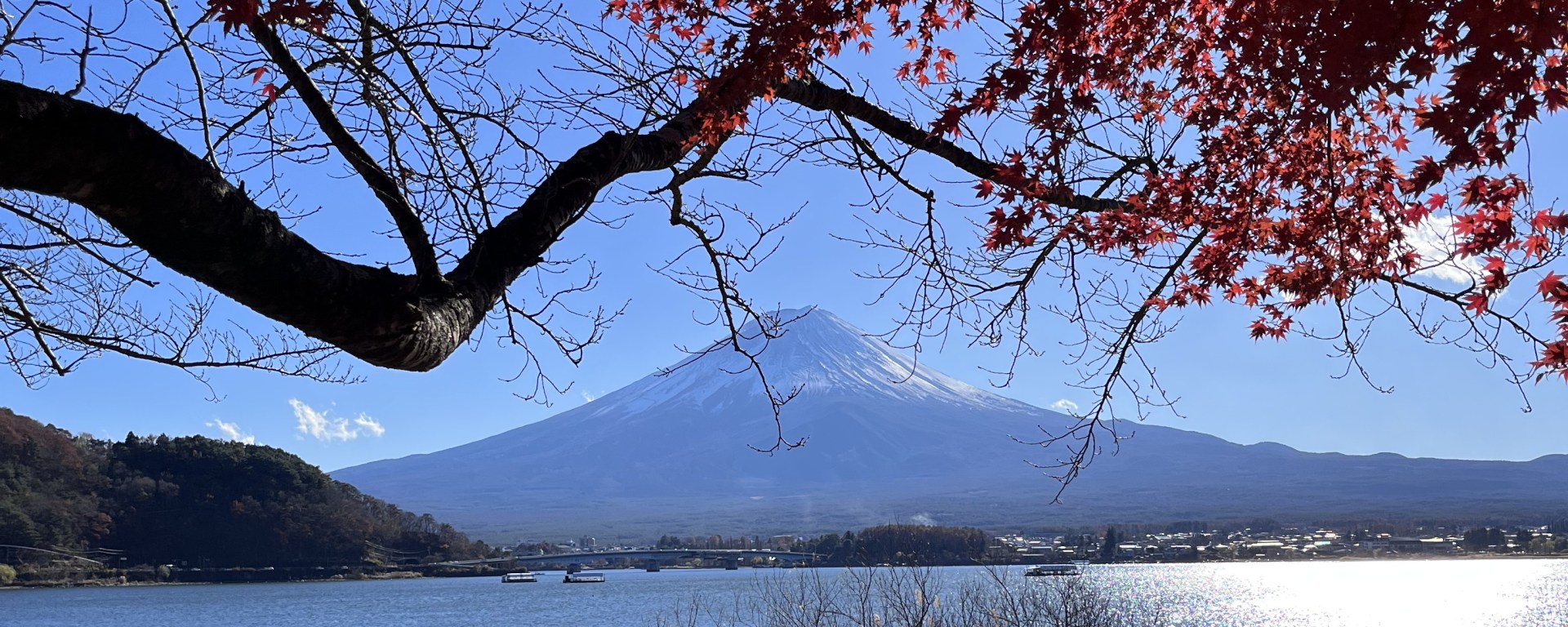
When planning my trip to Japan, a visit to Mount Fuji, the highest mountain in the country, was top of my list. Towering at nearly 3,800 feet, this majestic volcano is a cultural emblem of Japan. For centuries, it has been revered through distant admiration, pilgrimages to its summit and immortalized in art and literature. Thankfully, it has remained dormant since 1707, when it last erupted.
I have to admit, as I hopped on a train leaving Tokyo’s Shinjuku station, bound for a town at the base of the mountain, my expectations were low. As a tourist in the Instagram age, iconic monuments are frequently more underwhelming than impressive. Heavily filtered images of temples, billboards, and flower fields often fail to convey the reality: these popular attractions are overrun with swarms of tourists, pesky wasps and an unavoidable aroma of used nappies.
Based on this, I was really surprised when a few hours and a change of trains later, a perfect, purple, postcard-worthy pointy triangle came into view. For once, my expectations had been surpassed, not least because the train whizzing through the countryside towards my destination was Thomas the Tank Engine Themed.
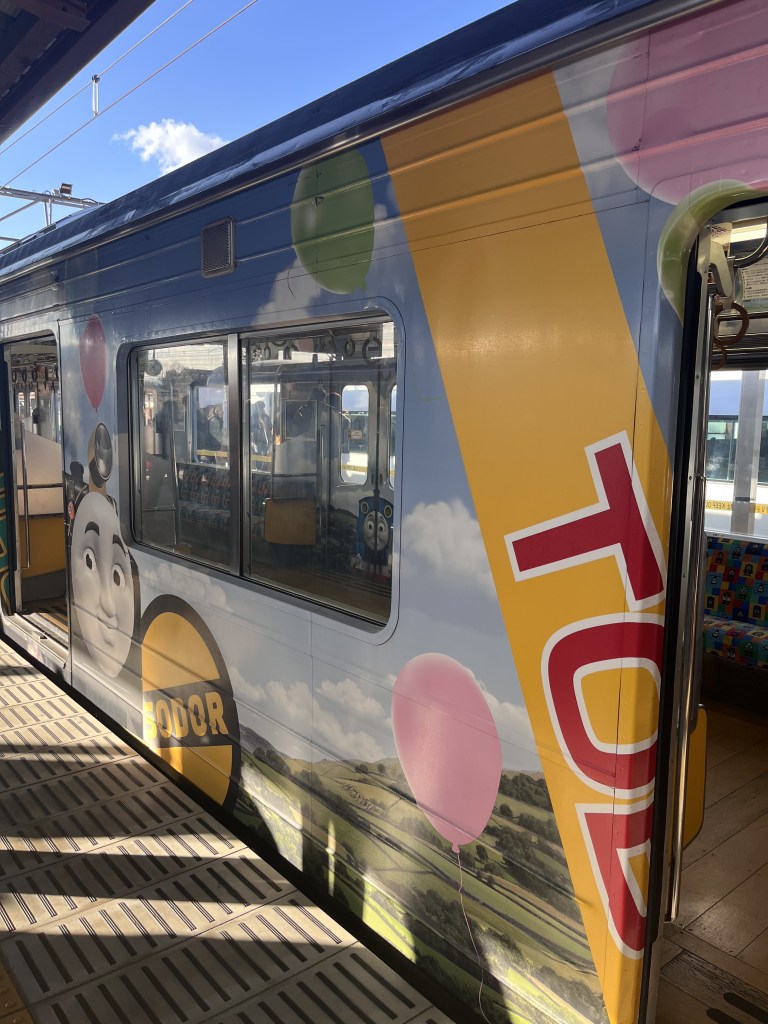
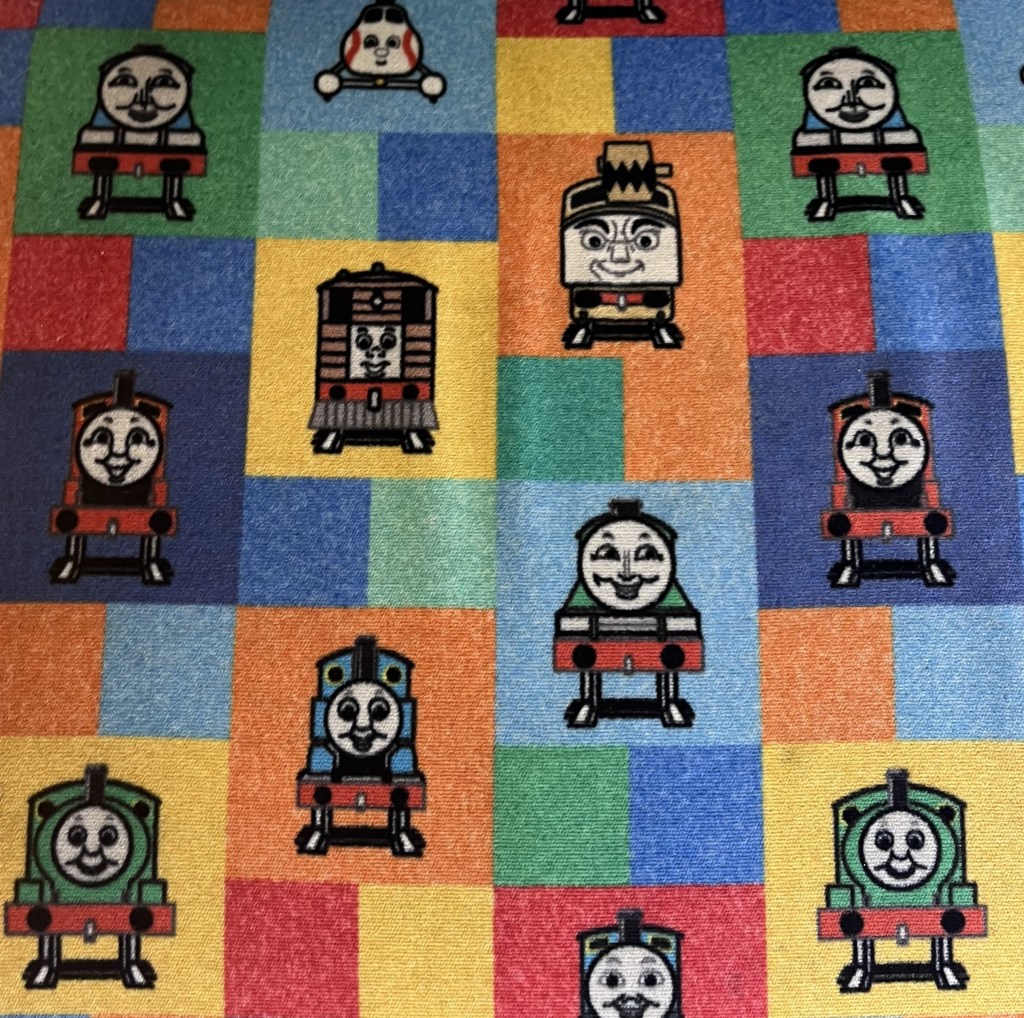
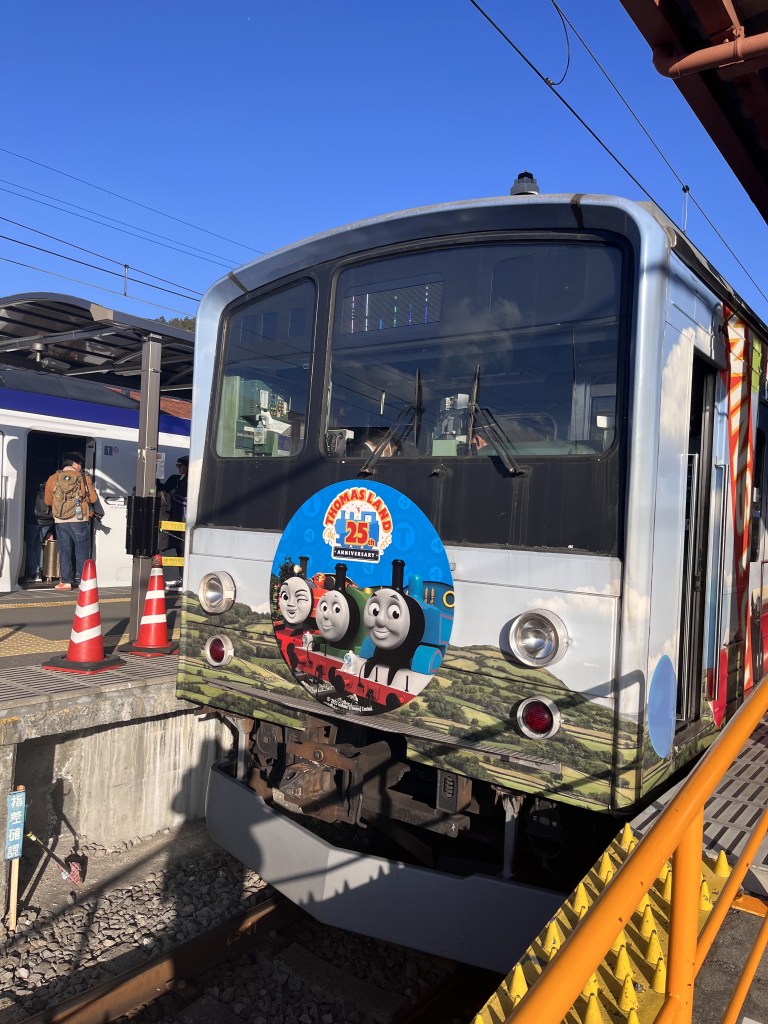
That’s right, a train covered in pictures of trains. A train with seats upholstered with little trains with faces. A train with so many trains plastered on its interior and exterior that had he merely glimpsed it, Francis Bourgeois would have squealed and collapsed on the ground. This magnificent chariot would take me to the lakeside town of Fujikawaguchiko for three days of fresh air and relaxation.
The mission of relaxation was immediately thwarted by the fellow passengers of the Thomas Train, who proved just as bizarre as its colourful exterior. Occasionally, as a solo traveller, I wonder if I would have enjoyed booking a group tour. Then I encounter a group tour and the feeling instantly goes away.
Between a woman giving two British Blokes™, a loud and unsolicited rundown of her skincare regime, an American man inflicting terrible jokes on the tour guide and a garrulous Australian intent on showing me all of his holiday photos, it was hard to call who would win the Christopher Columbus Award for the Person We Most Wish Had Stayed at Home. As soon as Thomas pulled into the station, I threw on my backpack and legged it through the ticket barrier, in a bid to escape.
Kawaguchiko station was a beautiful wooden building with mock Tudor gables. Throughout my trip, I got a sense that the Japanese are just as enamoured with England as English tourists are with Japan. In Japan, England is most commonly portrayed as a pastoral, Victorian utopia, complete with idyllic walled gardens and quintessential afternoon tea. In Kawaguchiko, this was demonstrated by the existence of attractions like ‘Peter Rabbit’s English Garden’. Annoyingly, my pitch for ‘Pete Doherty’s Post-Pint Punch Up: An Authentic British Attraction’ fell on deaf ears. This is crazy because kids under 10 go FREE and if you book in advance for a bonnet and afternoon tea.
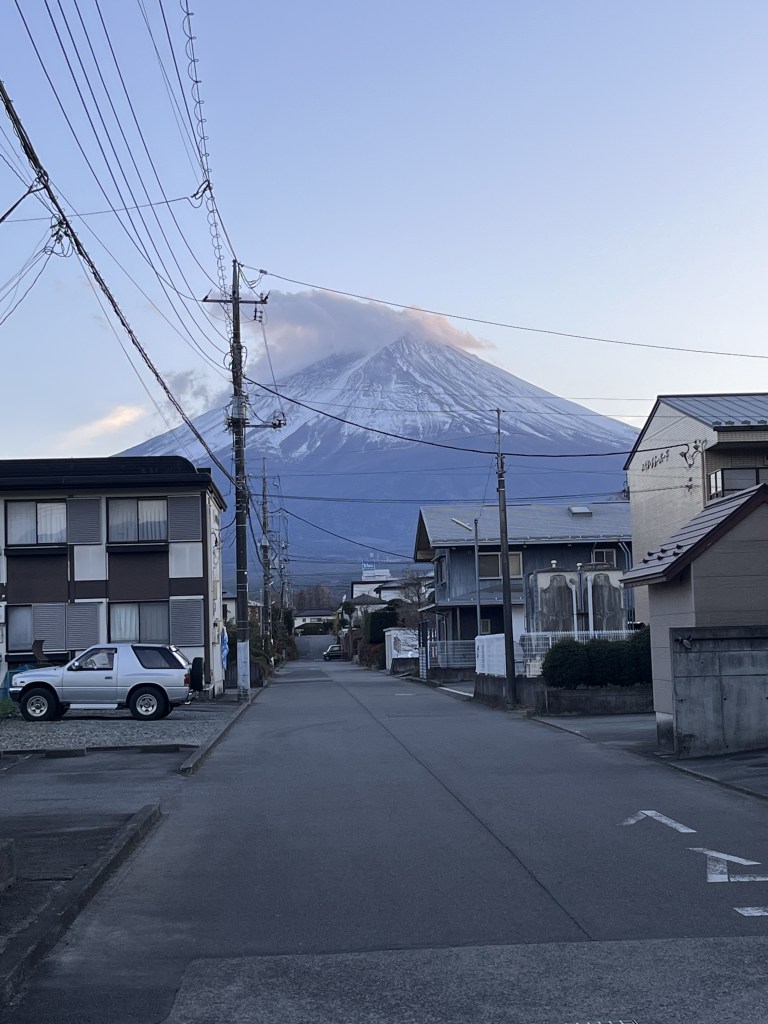
I arrived at my hostel and was delighted to find that I was the only person in an 8-bed dorm- score! The hostel had amazing views of the mountain and was run by a married couple and their sweet 3-year-old daughter. They were very welcoming and gave me great recommendations for my stay, like an autumn leaf trail walk which I decided to set off on the next day.
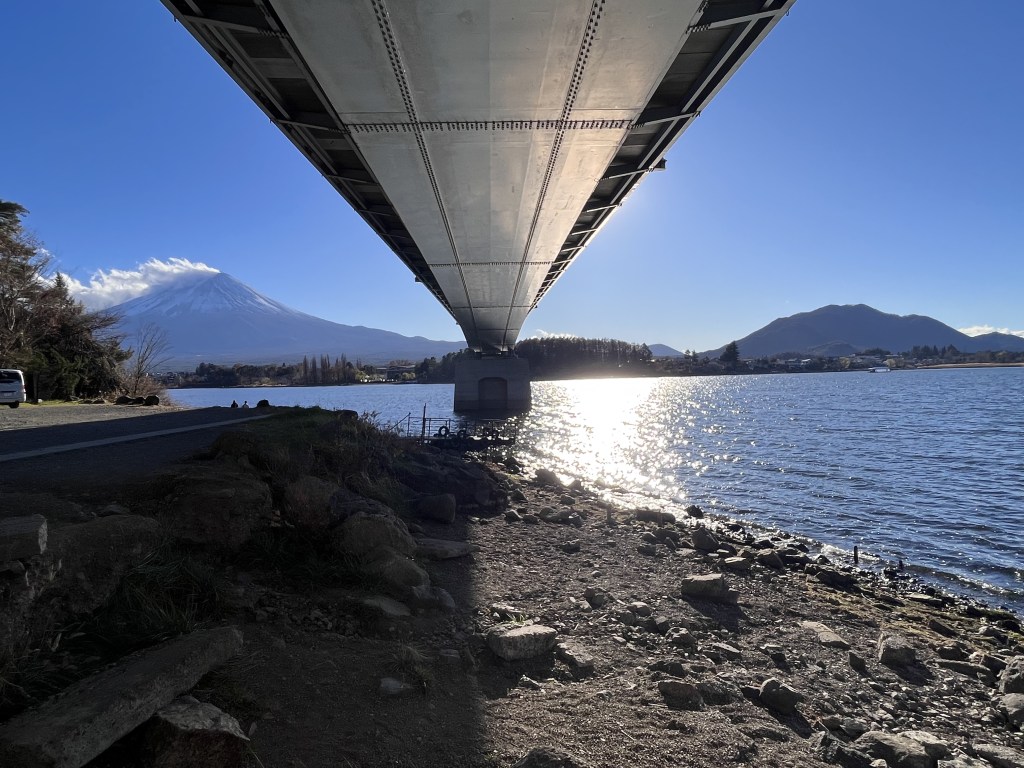
I got up early, eager to make the most of the day and beat any crowds that might form along the trail. The sun was bright and the air crisp, providing me with a beautiful view of the mountain as I strode through town and over the bridge to the opposite side of Lake Kawaguchi.
Fujikawaguchiko town has a population of roughly 26,500 and sits within an area known as the Fuji Five Lakes region, creatively named because well…there are 5 Lakes that are near Mount Fuji. It had a tranquil, sleepy vibe being winter season, the swan shaped pedal boats that would have been pedalled around the lake in summer bobbed along the shoreline waiting for warmer days. Despite it being the end of the season, a smattering of bright red maple leaves clung to the trees, worth prising myself out of my wooden hostel bunk for.
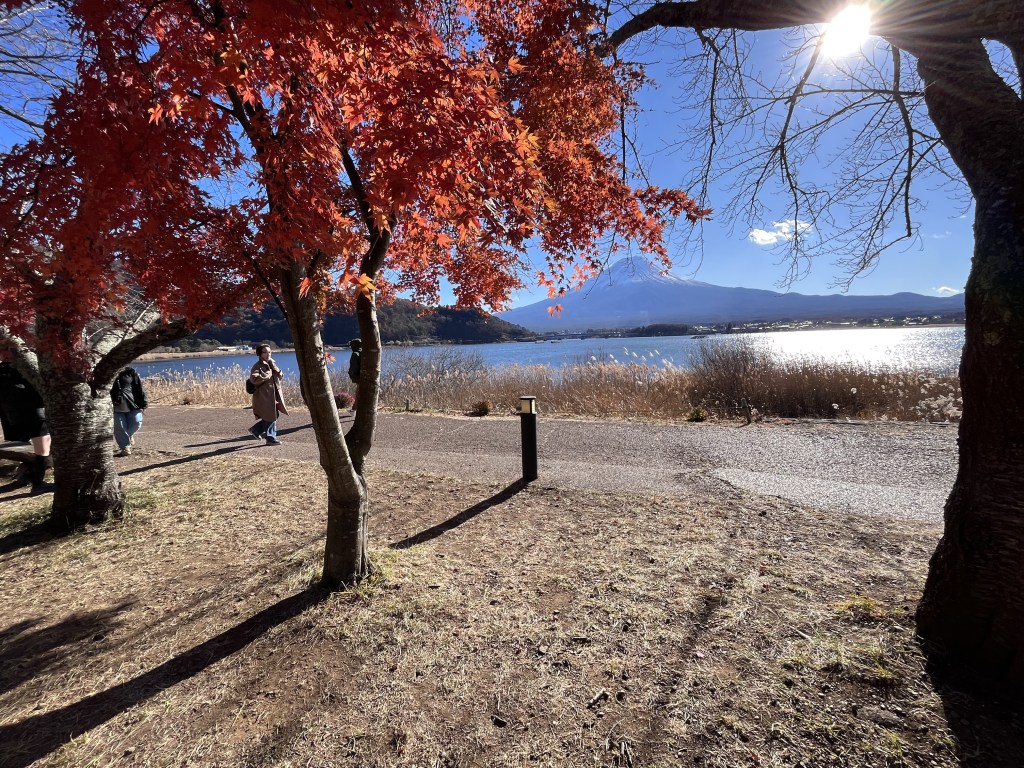
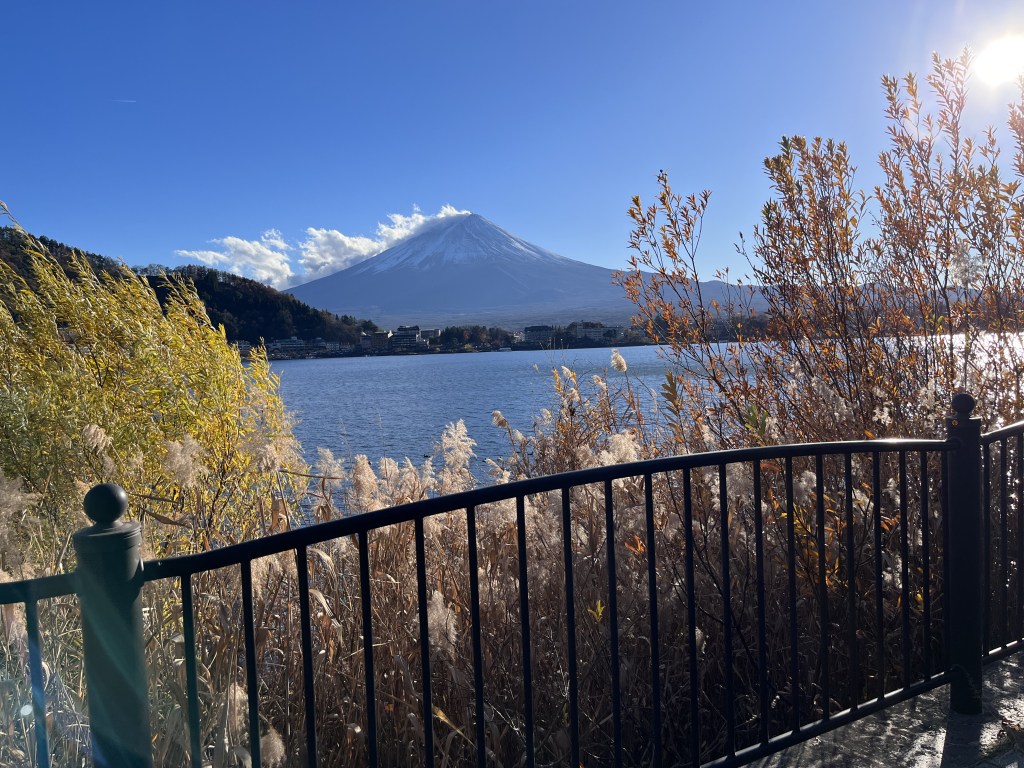
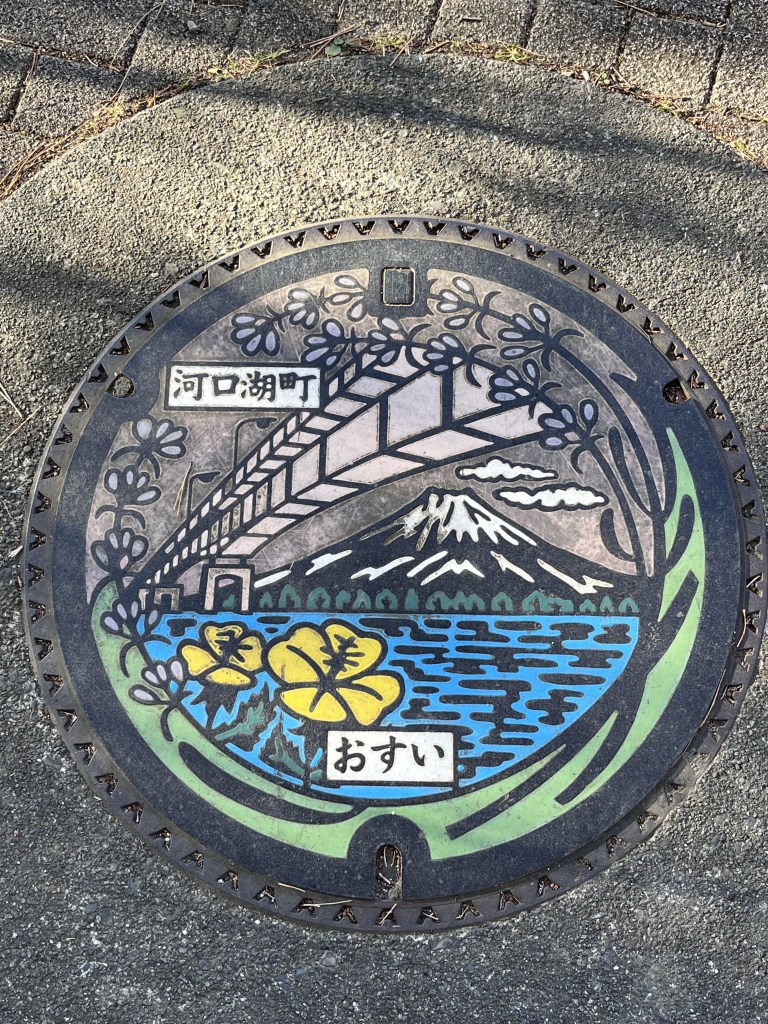
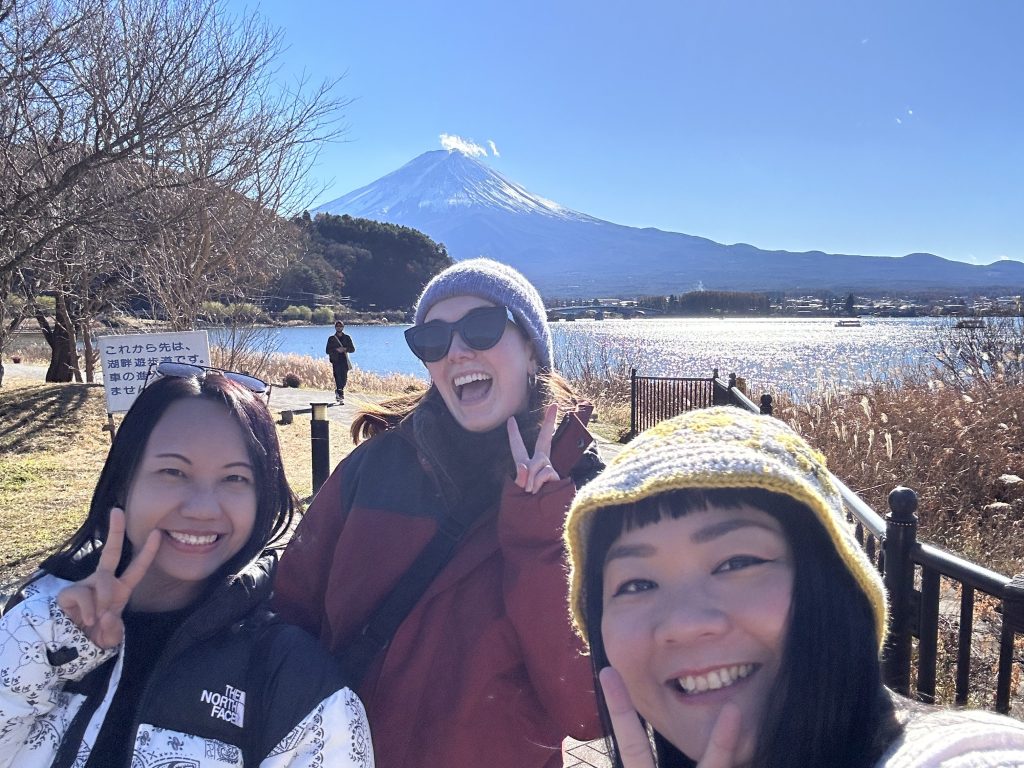
On the trail, I met Kathy and Kata from Hong Kong, when I offered to take a picture of both of them together. In return, they offered me a photoshoot with the mountain and told me that they had been to my home town of Oxford fairly recently. It was strange to think that we had probably passed each other in the Westgate or along the high street.
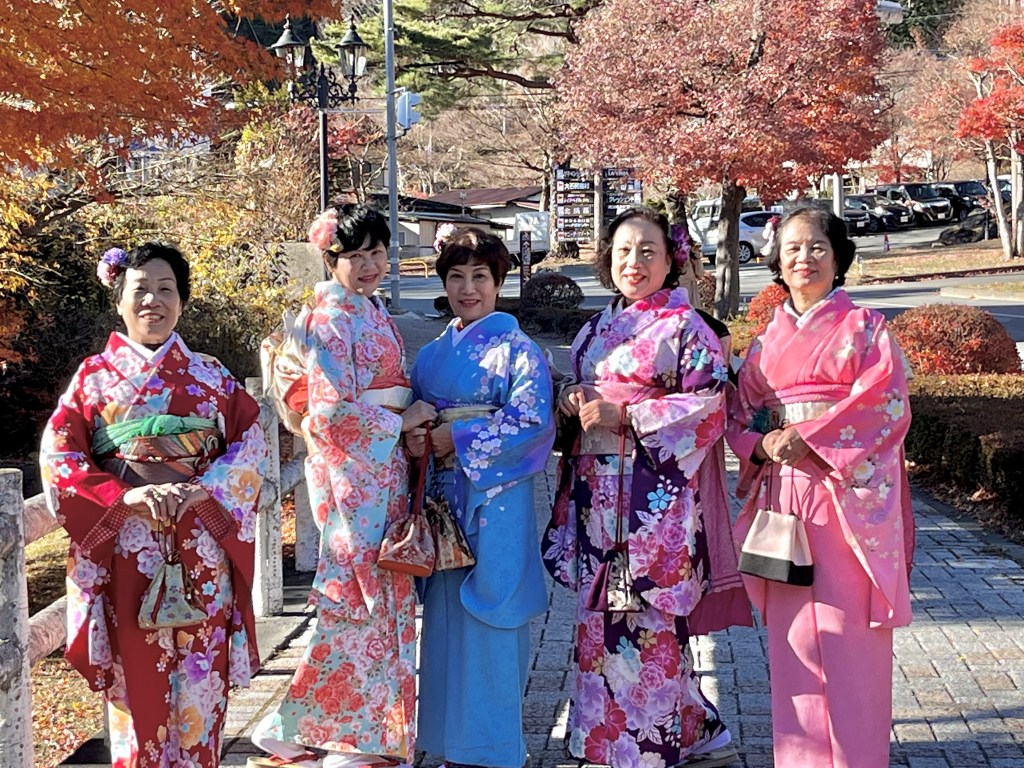
Further on, I also met these elegant ladies, who were having pictures taken in beautiful kimonos. They graciously allowed me to take a picture, I regret not asking them what the special occasion was.
The peaceful lakeside, which I shared with ducks, swans and a few other walkers, was a stark contrast to the bustling streets of Tokyo. I gulped down lungfuls of countryside air, knowing I would sleep well in my deserted hostel dorm.
Being unable to read Japanese characters (kanji) made me the unwitting executor of some Partridge-esque gaffes. For example, during the walk, I encountered this sign.
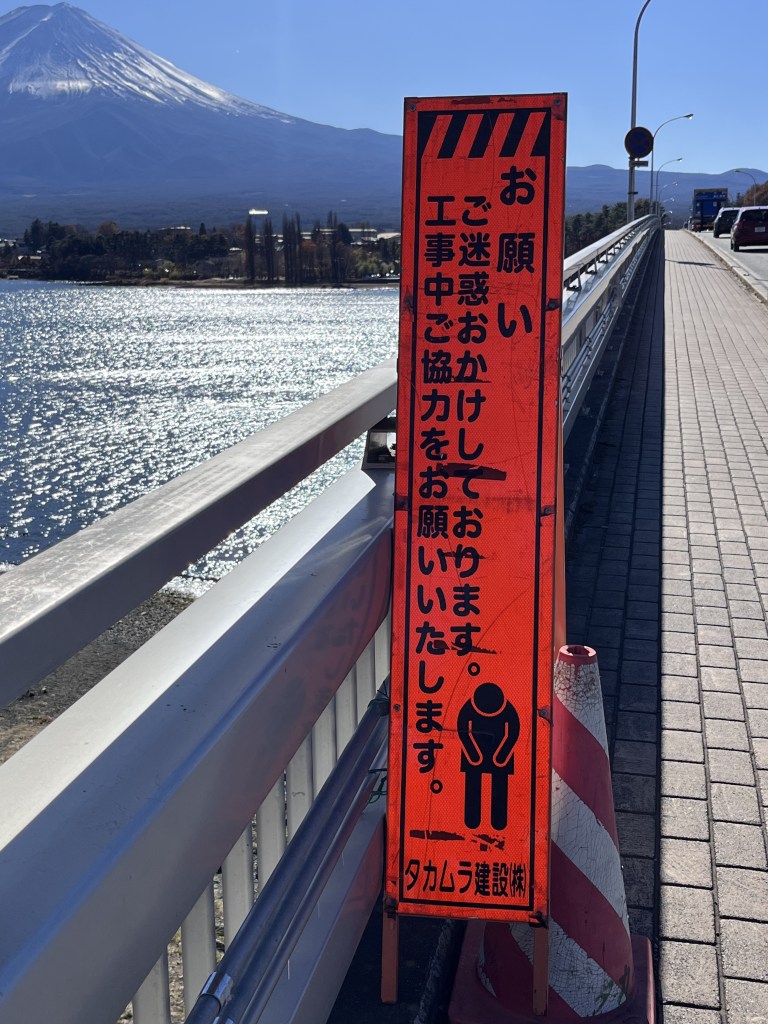
In Japan, it is important to show respect to shrines and other holy sites. To me, this sign was a clear invitation to bow to Holy Mount Fuji and so, to be a culturally sensitive tourist, I hastily bobbed from the waist in its direction. Eager to find out more, I used the Google Translate camera function, which revealed the sign’s inscription- a mystical Buddhist incantation of ‘Sincere apologies for the road works.’
In smaller Japanese towns, white Europeans are quite rare, meaning merely strolling down the pavement can elicit stares and often a friendly yell of ‘HELLO!’ Having effectively curtseyed to a pothole, I probably excited many Japanese motorists passing by, who were able to upgrade their ‘European!!!’ stare to a ‘European-doing-something-weird!!’ stare.
I would become more acquainted with both these stares at the next day’s activity- the onsen or traditional Japanese hot spring spa. I decided to book a morning of rejuvenation and relaxation in the name of culture, trying not to think about the catch: all bathers must be nude.
As a British person, there are few things I dislike more than being naked. Nudity always seems far too exposing, far too carefree, far too…French. As a result, for me stripping off is a rare event. So rare in fact, that the last time I got in the bath, WWF scientists tried to put a tracking tag on me. You can therefore imagine my trepidation as the free shuttle bus sped towards the onsen. I was starting to think I had made a terrible decision.
Luckily, I happened to meet two other solo female travellers during the drive- Winnie from the United States and Nicole from Hong Kong. They had met in a Facebook group and decided to team up for a relaxing spa day; they kindly let me join them.

The onsen was divided by gender, which spared some awkward encounters. Nevertheless, it’s an odd experience- getting stark naked within 20 minutes of meeting someone. I couldn’t help thinking as we collectively stripped off, showered and slid into one of several bubbling spa pools, ‘This is totally crazy!’, or as a rugby boy would say, ‘Just another Saturday.’
It was a really nice opportunity to relax and swap stories from our travels with a beautiful mountain view. For obvious reasons, you can’t take photos in the onsen, but the manager kindly let me use some photos from the website. As you can see, you get a great view of Mount Fuji from the pools!
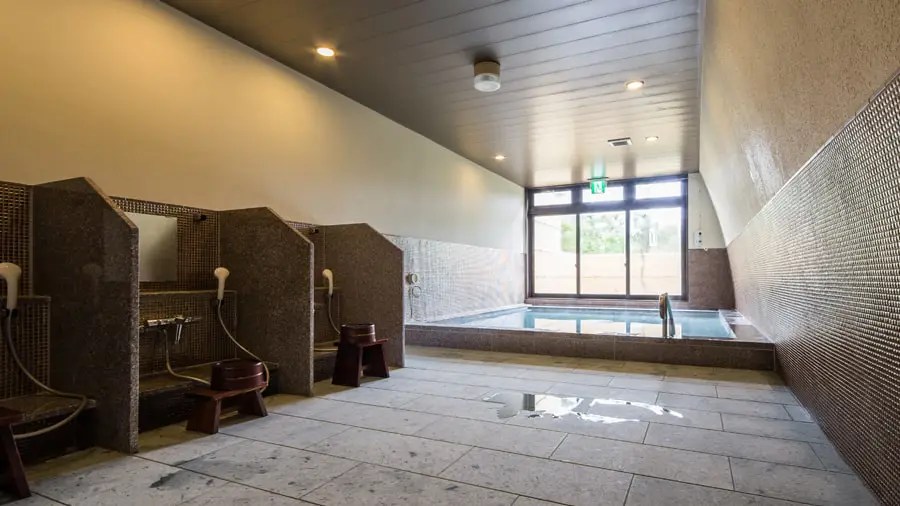
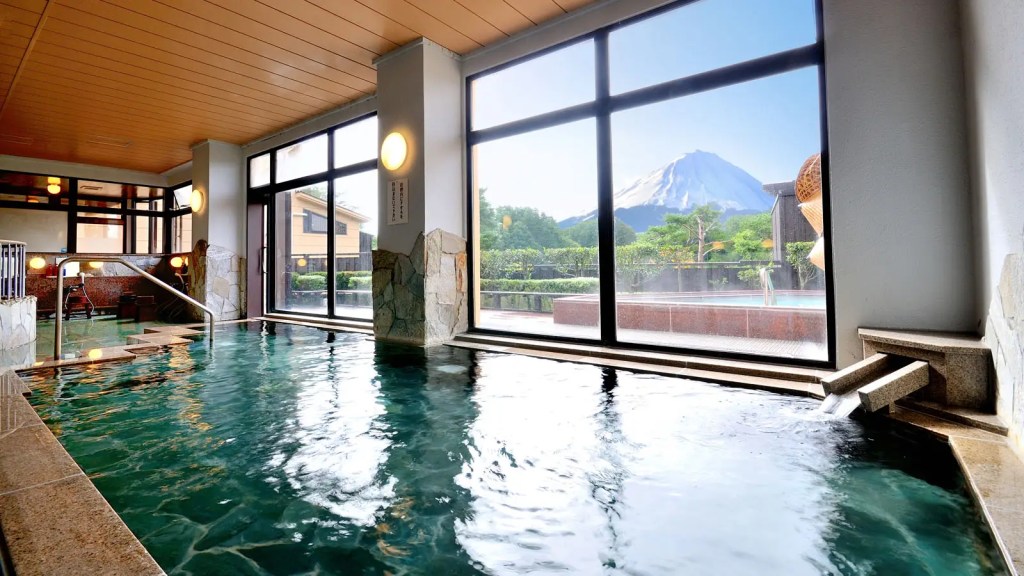
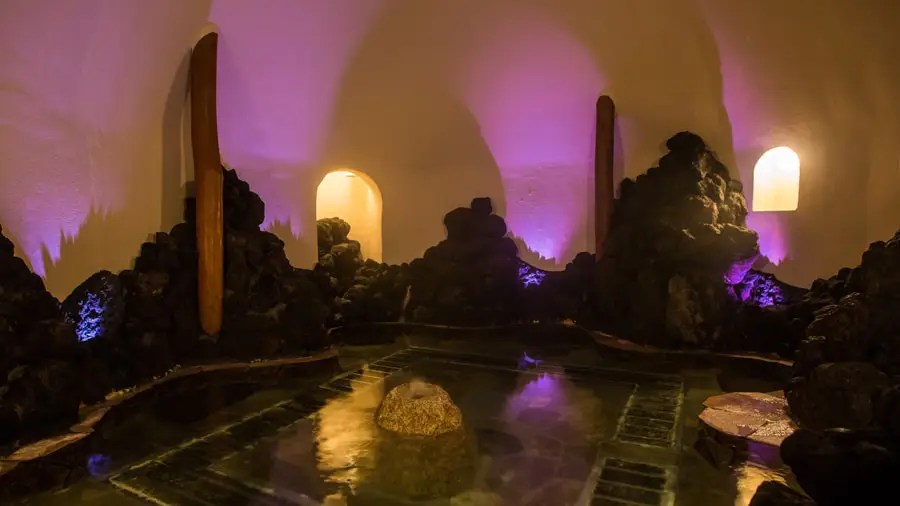
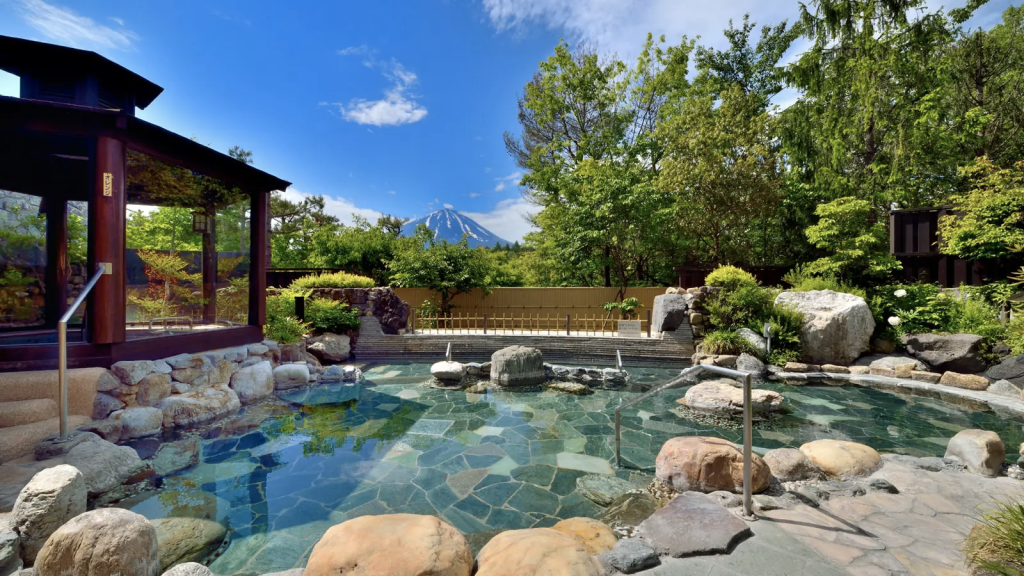
It was surprising how quickly the collective nudity began to feel… ordinary. In the UK, there are few contexts where nudity, especially for women, isn’t immediately sexualized. It felt refreshing and comforting to exist in my body without the worries of being judged against societal beauty standards or assessed by potential partners. I thought how lovely this must be to have as part of a weekly routine- a visit to a spa that is focussed on relaxation over beautification.
Yet, in this tranquil place, I found myself grappling with the contradictions inherent in Japanese culture. Despite calming spaces to let it all hang out, Japanese culture remains preoccupied with thinness and conformity. The fixation on maintaining a fashionable, youthful appearance was a surprising clash with Japan’s renowned respect for the elderly.
Everywhere I turned, I encountered clues that pointed to a society consumed by the pursuit of a ‘European’ aesthetic. From the prevalence of bleaching ingredients in skincare, to shops exclusively selling colored contact lenses, the idealization of pale skin and European features felt disconcerting.
To me, this indicated the pernicious influence of Western beauty standards and prompted me to consider the beauty norms perpetuated by Western culture. I couldn’t help but draw parallels between Japan’s skin-bleaching creams and eyelid surgeries and the popularity of self-tanning products and lip injections in the UK.
Too often, Japan is perceived by Westerners as a futuristic techno-playground with totally alien customs. However, as I delved deeper into Japanese culture, I began to realise that often, it simply amplifies the social codes prevalent in European culture, albeit in a more explicit manner. Each encounter in Japan served as a mirror, reflecting the hidden complexities and contradictions found the world over.
Join me next time as I explore Kyoto! xoxo

